




Lack of inventory visibility has long been one of retail's biggest operational challenges. When the information in business systems does not accurately reflect what is actually available in stores, distribution centers, or warehouses, the consequences quickly become apparent: stockouts, excess inventory, operational rework, and difficulties supporting omnichannel strategies.
In recent years, RFID technology has gained significant momentum because it helps retailers address exactly these challenges. By enabling the automatic identification of products, cartons, pallets, and assets, RFID dramatically improves the speed and accuracy of inventory control and traceability processes.
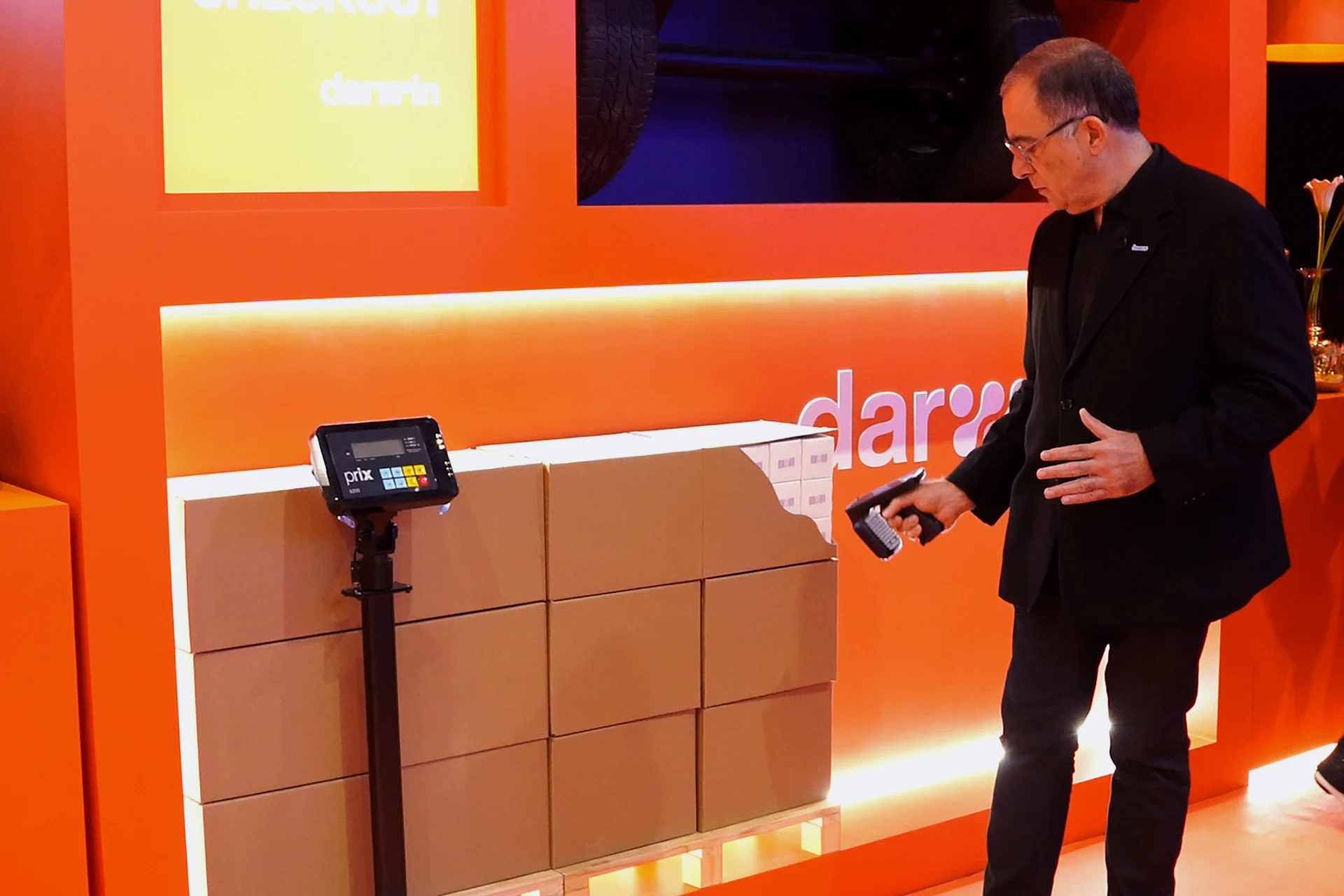
During APAS Show 2026, we showcased a live demonstration of Inwave's RFID solution at our booth. The demonstration attracted considerable interest and generated numerous questions about the technology's applications, benefits, implementation costs, and challenges.
For that reason, this article brings together the questions I hear most often from retail professionals when they begin evaluating RFID for inventory management.
1. What makes RFID different from traditional inventory control methods?
The primary difference lies in how information is captured. While barcodes require each item to be scanned individually, RFID can identify multiple items simultaneously without requiring a direct line of sight between the reader and the tag.
In practice, this means significantly faster processes that rely far less on manual intervention. In operations handling thousands of items, this difference has a direct impact on workforce productivity and on how frequently inventory can be counted.
2. Does RFID really improve inventory accuracy?
Yes. One of RFID's greatest advantages is its ability to significantly improve inventory accuracy and data reliability. In many operations, inventory discrepancies result from counting errors, unrecorded movements, or manual processes.
Because RFID enables fast and frequent inventory counts, it becomes much easier to identify differences between physical inventory and system records. The more frequently inventories are performed, the more accurate and reliable inventory information tends to become.
Results vary depending on each company's operational processes and execution discipline, but numerous industry benchmarks demonstrate consistent improvements. Companies such as Decathlon, Macy's, Inc., and Zara have reported significant gains in inventory accuracy, often reaching levels between 95% and 99% along with improvements in productivity and reductions in stockouts.
The greatest benefit is not simply achieving a higher accuracy percentage. It is the ability to perform inventory counts frequently enough to keep inventory continuously aligned with operational reality.
3. How long does it take to complete an RFID inventory count?
The answer depends on the size of the operation, but the time savings are typically substantial compared to traditional inventory methods. Tasks that once required hours or even days can often be completed in a fraction of that time.
This speed transforms inventory counting from an occasional event into a routine operational process. As counting frequency increases, retailers gain a much more up-to-date and reliable view of their inventory.
4. Is RFID only suitable for fashion retail?
No. Although the fashion industry was one of the earliest adopters of RFID, the technology is now widely used across multiple retail sectors.
Today, RFID is deployed in supermarkets, pharmacies, home improvement stores, electronics retailers, distribution centers, and logistics operations. Whenever there is a need to track products, cartons, pallets, or assets quickly and accurately, RFID is a powerful solution worth considering.
5. Can RFID be used to track pallets, cartons, and individual products with the same technology?
Yes. One of RFID's greatest strengths is its flexibility across different levels of traceability.
Depending on the objectives of the operation, companies can choose to identify only pallets, track sealed cartons, or implement item-level identification. This flexibility allows each business to adopt the level of control that best matches its operational needs and expected return on investment.
In this video, I demonstrate how RFID can be applied across different levels of traceability, from pallets and cartons to individual products and company assets.
6. Can RFID be used to manage company assets?
Yes. In addition to commercial inventory, RFID can also be used to manage fixed assets.
IT equipment, handheld terminals, tools, furniture, and other company assets can be identified and located much more easily. This simplifies asset audits while helping reduce losses, misplacement, and the time spent searching for equipment.
7. How does RFID help reduce stockouts?
Stockouts often occur not because products are actually unavailable, but because the information stored in business systems does not accurately reflect what is happening in the operation. In many cases, the product is physically in the store but remains in the backroom, stored in the wrong location, or has not yet been replenished onto the sales floor.
When retailers gain more accurate visibility into inventory by location, they can identify discrepancies much sooner and take corrective action before product availability is affected. This leads to better shelf replenishment and fewer lost sales opportunities.
8. What role does RFID play in an omnichannel operation?
Strategies such as Click & Collect, Ship from Store, and unified commerce all rely on one essential requirement: knowing exactly where every sellable product is located.
Without confidence in inventory data, the risk of failing to fulfill customer promises increases significantly. RFID improves inventory reliability, providing a much stronger foundation for efficient and scalable omnichannel operations.
9. Does RFID replace ERP or other management systems?
No. RFID does not replace the management systems already used by a business.
Its role is to capture data from the physical world with greater speed and accuracy. This information can then be integrated with ERP, WMS, store management systems, or any other platforms used by the operation. In other words, RFID complements existing systems by making their data more accurate and reliable.
10. Is it necessary to tag every product?
Not necessarily. The best strategy depends on the project's objectives and the characteristics of the operation.
Some companies begin by tagging only specific product categories, high-value items, or selected processes. Others choose a broader deployment from the start. The key is to clearly define the problems you want to solve and the level of traceability required to achieve the expected results.
11. How can you start an RFID project with minimal risk?
A recommended approach is to begin with a controlled pilot implementation focused on a well-defined area of the operation. This allows the organization to establish processes, measure operational improvements, and identify any necessary adjustments before expanding the project on a larger scale.
This stage also provides concrete performance indicators to support decision-making. Rather than relying solely on projections, the company can evaluate actual results from its own operation, reducing risk and increasing confidence in future expansion.
12. How do you know if your operation is ready for RFID?
There is no single criterion, but several indicators suggest that RFID is worth evaluating. Time-consuming inventory counts, frequent inventory discrepancies, challenges supporting omnichannel operations, recurring stockouts, and limited visibility into company assets are among the most common signs.
If these challenges are part of your day-to-day operation, it is worth exploring how RFID can help improve operational efficiency and increase the reliability of the information used to manage your business.
Conclusion: Poor Inventory Visibility Creates Hidden Costs
When inventory records no longer reflect operational reality, retailers are forced to make decisions based on incomplete or inaccurate information. This affects sales, product availability, employee productivity, and ultimately the customer experience.
RFID has become one of the most effective technologies for improving inventory accuracy by enabling faster, more precise, and highly scalable inventory management processes.
If your company is looking to strengthen inventory control or improve operational efficiency, now is the time to explore how RFID can be applied to your business.
Greater security and control for your business


