


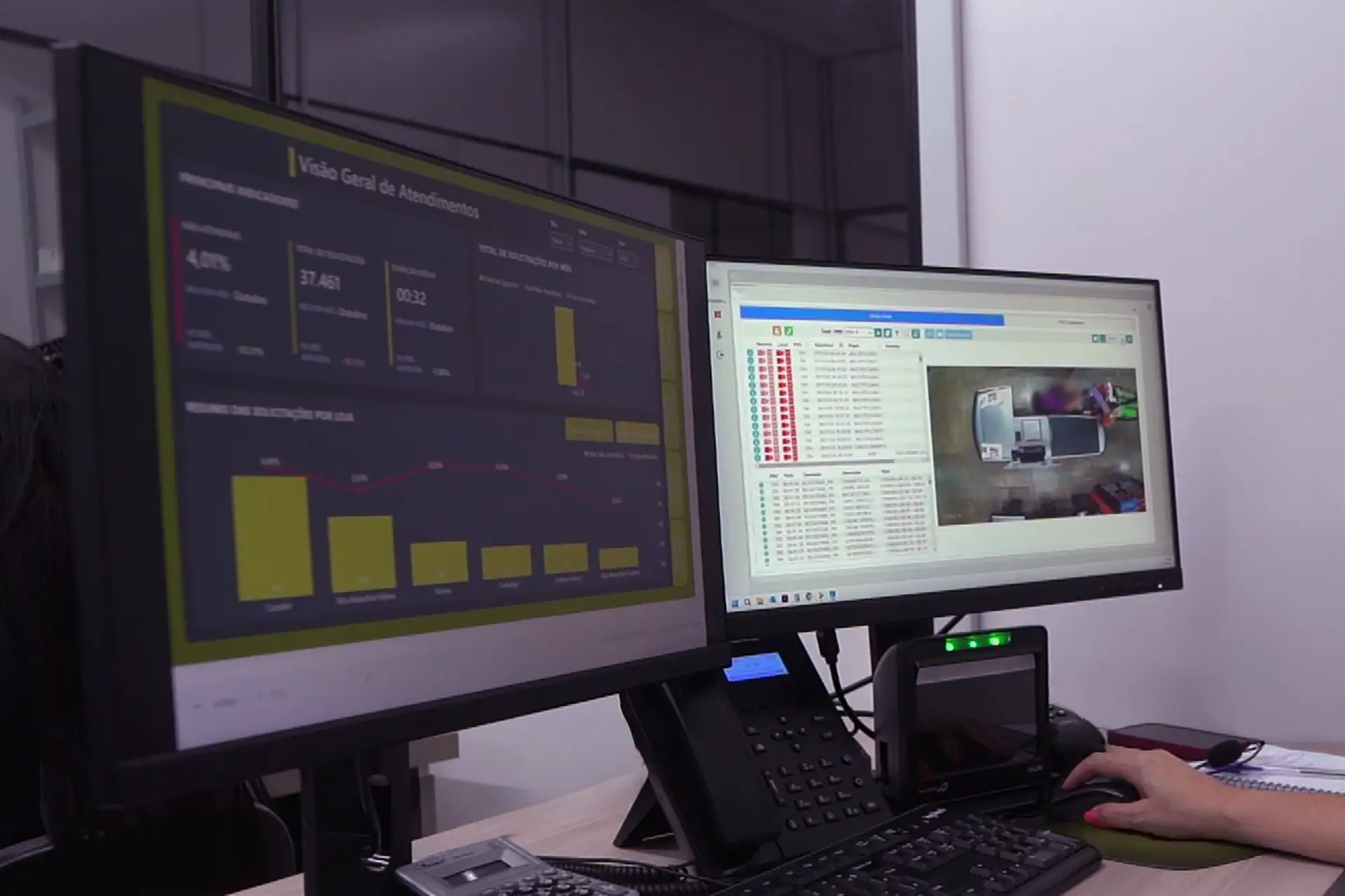


Monitoring plays a decisive role in the operational efficiency of modern retail. However, to fully unlock its potential, it is important to understand that it goes far beyond simply using security cameras.
The true value of monitoring emerges when it drives action, connecting visibility, real-time data, and operational readiness to support fast decision-making.
In this context, investing in a CCTV system is only the first step. It is essential for retail chains to leverage technology features integrated with cameras to transform monitoring into a tool capable of improving processes, reducing losses, and increasing operational efficiency.
In this article, we will explore the importance of strategically integrating monitoring into your store’s daily operations.
What is monitoring in the operational context of retail?
Operational monitoring is the ability to continuously track processes, workflows, and behaviors, guided by reliable data that enhances store efficiency.
It involves people, processes, and connected technologies working together to observe operations in real time, identifying deviations, risks of losses, and opportunities for continuous improvement.
Unlike traditional use, modern monitoring integrates images, operational indicators, and real-time alerts to support day-to-day management with immediate responsiveness.
In this context, CCTV solutions have evolved far beyond passive recording, becoming intelligent video monitoring tools that generate strategic data to increase visibility into critical store processes.
When well planned, monitoring becomes the foundation for operational efficiency, security, loss prevention, and routine optimization in retail networks.
Steps to achieve operational efficiency through monitoring in retail
Achieving operational efficiency through monitoring requires a few strategic steps.
Visibility: the first step toward efficiency
Operations become more efficient with continuous visibility into what is happening in stores, distribution centers, and critical retail processes.
Occasional audits provide limited snapshots of reality and do not replace the daily monitoring of operational processes.
Visibility makes it possible to identify patterns, anticipate failures, and understand root causes that, for example, increase losses in stores.
The Darwin platform enhances this visibility by consolidating data, images, and indicators into a single view focused on centralized management. With continuous visibility, managers move from reacting to problems to acting preventively and strategically.
Real-time: when monitoring stops being passive
In this same direction, real-time monitoring raises the level of operational efficiency in retail.
After all, problems identified at the moment they occur are less costly to fix and have a smaller impact on the customer experience.
Excessive queues, service failures, or operational deviations can be addressed before turning into financial losses.
Real-time capabilities transform monitoring into an active tool, supporting quick interventions and increasing team readiness to handle day-to-day issues.
This operational agility is one of the central pillars of efficiency in increasingly complex and dynamic retail environments.
Data-driven action: turning visibility into action
Operational efficiency is not just about seeing what is happening, but about acting at the right time.
Operational readiness means having processes, teams, and systems prepared to respond to alerts generated by smarter and faster monitoring technologies.
This alignment enhances the power of monitoring, reduces rework, improves operational response, and strengthens efficiency in daily store operations.
Security cameras: from protection to operational intelligence
Security cameras are no longer just passive protection tools—they have become strategic sources of information.
When integrated with analytics systems, they help understand operational flows, purchasing behavior, and patterns of losses and risks that directly impact efficiency.
In this context, intelligent video monitoring expands the role of images, transforming visual records into actionable data for management.
This advancement allows security to also contribute to productivity, standardization, and continuous process improvement.
In modern retail, cameras support operational decision-making not just investigations after problems occur.
Conclusion: how to turn monitoring into operational efficiency
To integrate monitoring into operational efficiency, a shift in mindset is essential, one that connects continuous visibility, real-time data, and operational readiness for faster and more assertive decision-making.
Inwave supports retailers in this transformation by integrating monitoring, data, and intelligence to enhance operational efficiency across stores and retail networks.
Discover our solutions to grow with security and a strategic vision in 2026!
Do you want more control over all the stores in your network?


