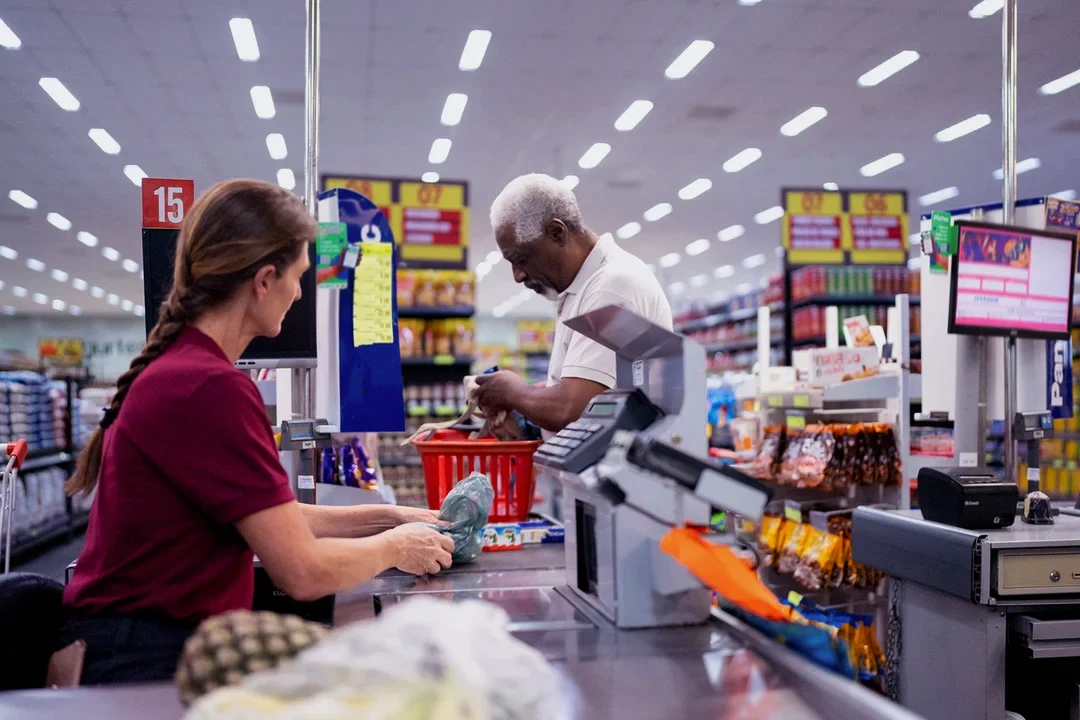


Loss prevention has become one of the biggest challenges facing Brazilian retailers, and in this context, small operational mistakes can have a direct impact on business results. That's why reducing checkout errors is essential to improve efficiency, optimize costs, and enhance the customer experience.
According to the latest edition of the Abrappe Retail Loss Survey, conducted by KPMG and Abrappe, total retail losses reached R$36.5 billion.
A significant portion of these losses is directly related to operational failures (including checkout errors), theft, and inventory inaccuracies.
Let's look at the most common issues and how to overcome them.
Why checkout errors are a critical issue in retail
The checkout area has a direct impact on productivity, customer service, and operational control. When checkout operations run smoothly, stores reduce queues, speed up transactions, and improve the shopping experience.
On the other hand, failures at this stage lead to delays, rework, financial losses, and product shrinkage. Contrary to what many people believe, most losses result from operational errors rather than fraud or employee collusion.
In many cases, the root cause is the lack of standardized processes and limited visibility into store operations.
Avoiding checkout errors does not necessarily require expanding your workforce or infrastructure. In many cases, the greatest gains come from reviewing existing processes and making better use of available resources.
The most common checkout errors
1. Lack of standardized customer service procedures
One of the most common checkout mistakes is the absence of standardized operating procedures.
When each cashier performs tasks differently, the operation becomes more vulnerable.
This increases cancellations, exchanges, and makes verification processes less secure.
Beyond increasing operational errors, inconsistency also negatively impacts the customer experience and reduces productivity.
2. Too many manual processes
Many retail operations still rely on in-person approvals and manual procedures, making checkout slower, especially during peak hours.
Besides creating longer queues, manual processes increase the likelihood of human error and, consequently, financial losses.
3. Lack of visibility into operational events
Not all checkout errors are immediately detected. Without consolidated data, retailers struggle to identify recurring patterns and operational bottlenecks.
Frequent cancellations, transaction discrepancies, and non-standard approvals may go unnoticed without real-time monitoring.
This highlights the importance of data-driven retail management.
4. Discrepancies between registered items and merchandise
Scanning errors, incorrect product codes, and operational failures can create discrepancies between registered items and the products actually sold.
Although these mistakes may seem minor, they directly affect inventory accuracy, revenue, and operational performance indicators.
5. Slow checkout during peak hours
Peak shopping periods require checkout operations that can handle high transaction volumes efficiently. When they cannot, queues grow longer and the customer experience suffers.
In addition to customer dissatisfaction, long queues can lead to abandoned purchases and negatively impact retail performance.
6. Lack of integration between store operations and loss prevention
Loss prevention should work as an integrated part of store operations. When these departments operate independently, the retailer's ability to prevent losses is significantly reduced.
Critical information fails to circulate effectively, and recurring operational issues take longer to identify and resolve.
How to prevent checkout errors without increasing costs
Reducing checkout errors does not necessarily require additional investment. Many improvements come from optimizing existing processes.
The first step is reviewing operational routines and eliminating unnecessary procedures. Standardization also helps reduce errors and improve productivity.
Another important strategy is centralizing operational oversight and inspections. Remote auditing enables faster response times while reducing the need for on-site supervision.
It is also essential to use data strategically. Performance indicators help identify recurring issues, peak periods, and employee training needs.
How technology helps reduce checkout errors
Technology plays a key role in minimizing checkout errors. Digital solutions enable retailers to monitor events, generate alerts, and track performance indicators in real time.
In addition, digital platforms help standardize processes and strengthen checkout loss prevention strategies.
Darwin, Inwave's checkout management platform, supports this process by centralizing information and providing greater visibility into critical store operations.
All of this contributes to lowering operational costs through automation while allowing teams to focus on more strategic business activities.
Conclusion
As we've seen, even small checkout errors can have a significant impact on retail operations.
Operational failures, slow processes caused by a lack of standardization, and limited visibility into store activities reduce productivity, harm the customer experience, and ultimately affect financial performance.
The good news is that many of these challenges can be addressed without directly increasing costs. The real opportunity lies in optimizing processes, centralizing operations, and making smarter use of data and technology.
With Inwave's support, the checkout area becomes an increasingly strategic driver of retail efficiency. Our solutions help retailers overcome common operational challenges, strengthen strategic capabilities, and achieve sustainable growth.
Remote Checkout Monitoring